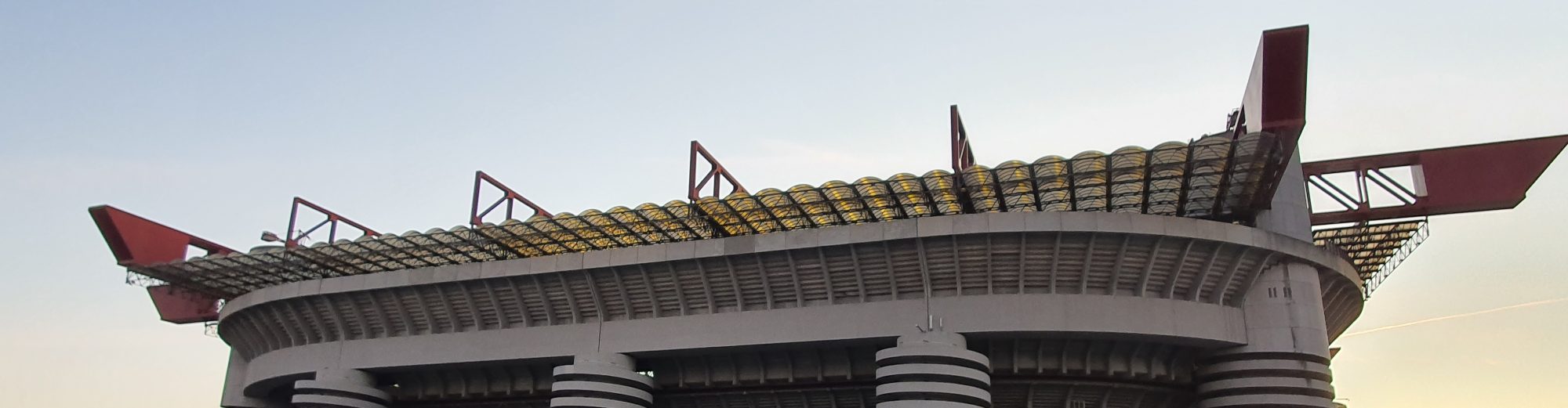
Laying the foundations
As well as the lure of reading about stadia in Simon Inglis’s Sightlines, I found this book was just as memorable for a captivating piece of travel writing – the story of one journey to South America that weaved its way between chapters.
The closest I’ve got to the location of this tale is a beach holiday on the Mexican coast. Despite this, I have discovered a great fondness for Argentina’s capital, Buenos Aires or ciudad de los estadios as Simon refers to it – the city of stadiums.
Buenos Aires is a sprawling conurbation of 12 million people with a huge concentration of clubs that are strewn across the country’s football heartland, each one a major part of its local community. And there are many communities with the Greater Buenos Aires area, comprising the main city itself and 24 municipalities. Each club, no matter how large, has its own home. A visit is not yet on the horizon, but taking a close look at the homes of Boca’s La Bombonera and River’s El Monumental, amongst numerous others, is certainly one for my bucket list.
The one thing that did strike me whilst reading about the ciudad de los estadios was that Buenos Aires is perhaps not that unique as far as the number of stadia go, though its 36-plus sizeable football grounds might be. It did made me think that maybe there are other contenders that could be crowned the world’s number one Stadium City.
Brazil has certain similarities within each of the main football cities, Sao Paolo and Rio de Janeiro. Both are major cities and with a club structure more focussed around these hubs than the wider country.
Heading west from Buenos Aires you eventually reach Melbourne – a place with a more varied base of popular sports than the South Americans who major in football. Melbourne is a home to cricket, football, Australian rules football (it is its spiritual home with 10 teams playing in the AFL), both rugby codes and has hosted both the Olympic and Commonwealth Games. I’ve managed to get far closer to this one, having visited Sydney a few months after its own Olympic effort. Whilst there, I managed to pop into the Olympic rowing and white water canoeing venues as well as the twins of Moore Park – the Sydney Football Stadium (now Allianz stadium) and the stunning SCG – wishing I’d had more time for a trip to Victoria’s capital. Melbourne, you are also on my list!
Elsewhere, other countries have a spread of stadia across their entire territory, brought about from having several large cities. Places like Germany, Italy and Spain have a number of impressive stadia, again heavily football focussed, but no single city has very many professional sports clubs.
The USA is blessed with an enormous number of massive stadia – probably making it the Country of Stadia. It also has an enormous number of huge population centres with a franchise system that leads to one club cities, with LA and New York the notable exceptions. That said, the Americans love their sport and play several games that need big venues. Additionally, the majority like their own space, built solely for use by their team, making Los Angeles North America’s candidate city.
In writing this, I realise I have lots of travel to do in the coming decades, having only visited one stadium in the States – Orlando’s Citrus Bowl for my first live taste of the Olympics. This was the first hint for my future wife that holidays could be interrupted by a stadium visit.
In most countries, the size of cities or, more accurately, their greater metropolitan areas broadly follow Zipf’s law, which suggests that the size distribution of cities within countries tends to follow a pattern in which the largest city is about twice the size of the second city, three times the size of the third city, and so on. In countries where it does apply, wealth is also less concentrated in a single location. This appears to also affect the concentration of top-level sports clubs and facilities.
To be considered the true candidate for the title of Stadium City we are, firstly, looking for a metropolis with a disproportionately large population. And to ensure it is more than a city of football stadia, it needs a broad interest in several sports. Best of all, we need a place with teams and governing bodies who are reluctant to share the use of their venues.
Epitomising the phrase ‘an Englishman’s home is his castle’ and a desire for teams and stadium owners to control what goes on their own homes, which leads to a lack of sharing, there is an obvious contender closer to home. It is a major footballing hub and the spiritual home of rugby, cricket and tennis. It is four times larger than the nation’s next biggest metropolitan area, a massively wealthy financial centre and the only place to have hosted three Olympic Games. Better still, it’s on my doorstep!
In the next part, I will explore what, for me, makes London such a special sporting hub and why it should be considered the Stadium City.
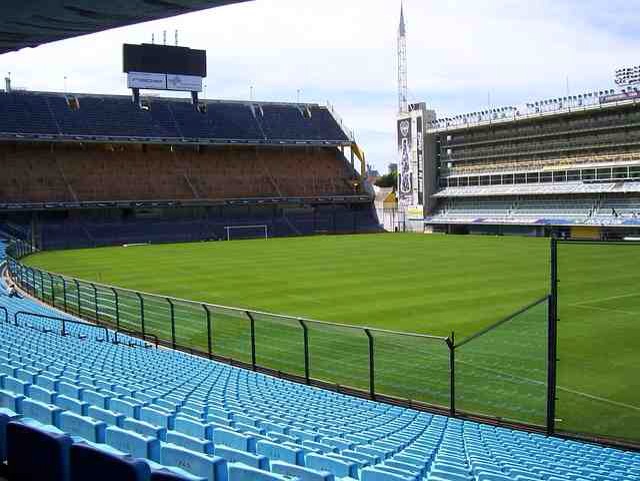 Image: Boca Junior’s La Bombonera
 StadiaGaga