I recently joined a telecommunications company whose raison d’être is to support migrants, and to make lives in their new home countries as easy and comfortable as possible. As part of the new-joiners’ induction process, everyone is usually asked to tell their migrant story; for a number of very valid reasons, I have so far avoided that induction question. In discussing this yesterday, it did make me wonder what mine would be. As somebody born, raised and still residing in Essex, and of English parentage, this isn’t an immediately obvious question for which I can find an answer. I know I have some German and Irish ancestors, but I don’t know much about their stories and what brought them to Britain. Out of the blue, it struck me that we can be affected by migrants with whom we have no family links when I read the sad news that renowned architect Dame Zaha Hadid had died, aged just 65.
You may have read a number of articles already about Hadid and her stellar career. You may also have your own thoughts about her designs and her reputation for provoking controversy. For me, Hadid will forever be a huge part of my history and is, perhaps, the most influential migrant to have touched my life.
That link is very loose as I never met Hadid in person. That said, I adored her unique designs with their flowing lines and curved edges that boldly appeared to ignore any attempt to fit in with the surrounding architecture. She didn’t seem to care for cost or how her designs would be realised; she simply got on with her life-mission to create visions of beauty and allowed the arguments to rage around her.
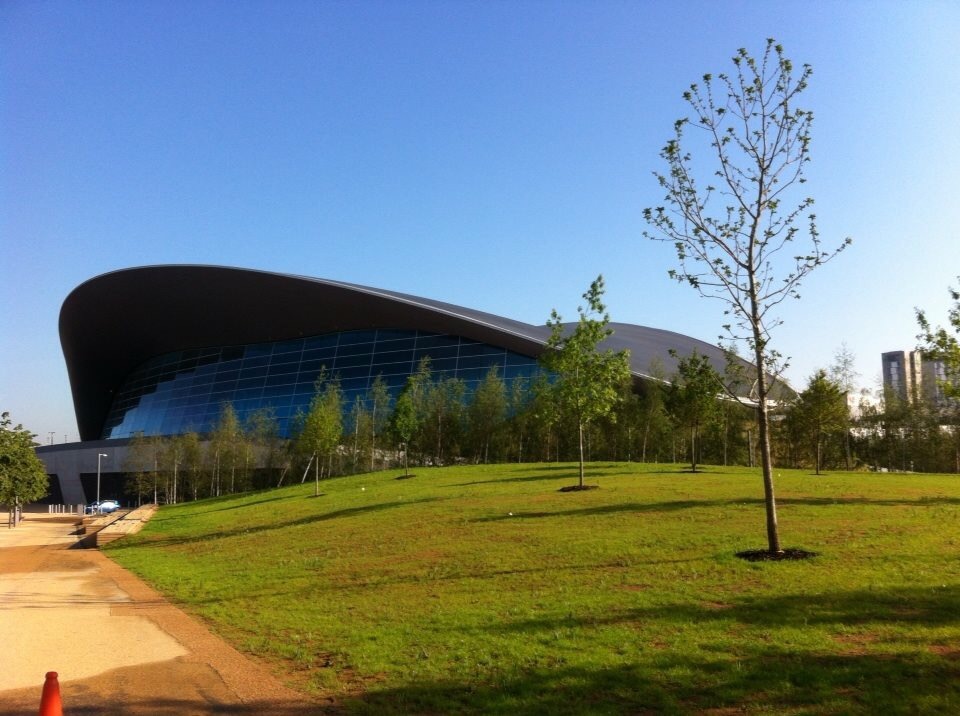
The greatest impact she had on me was the design of the London Aquatics Centre for London 2012. This was a place that I was fortunate to be able to call home for the best part of eight months during that outstanding Olympic year.
I instantly fell in love with the curved roof and the internal smooth raw concrete walls and the abundance of glass. Unlike Hadid, I didn’t mind the lack of sophistication in the design of the wings to house the temporary seating; I was in awe at the simplicity and ingenuity that would enable this venue to be a raucous home to Olympic and Paralympic aquatics events before eventually reverting to its intended legacy mode. In its final form, it provides the most elegant of gateways to the Olympic Park and will forever be seen as the building that raised her profile to the wider public.
Architecture’s loss is shared by two countries who can claim to have lost one of their own. Not only have we seen the passing of one of Iraq’s finest, we can also proudly claim her to have been one of Britain’s Great Dames.
 StadiaGaga