The Big Build
Having laid the foundations in part one, the next step in any stadium project is the big build. Constructing something of this scale cannot be rushed and can often be beset by unforeseen difficulties, as experienced during my building the case for London being crowned the Stadium City…
Starting with the country’s main sporting passion, London is unique, at least in Europe, in having so many top level football clubs in one city. At the very highest level, three clubs have recently dominated as part of England’s ‘big seven’ – along with pairs of clubs from each of Manchester and Merseyside. I do understand that including Spurs in the top echelons is slightly biased, but one season in the Champions League and regular top 5 finishes (along with the miracle witnessed on New Year’s Day) count in my book! It is entirely feasible that West Ham could join that group, especially with the way this season is panning out and their bright new future in super-connected Stratford. Added to the four stalwarts of the top flight, there are regularly another couple of London clubs in the Premier League, with Brentford, Charlton and Fulham (plus Watford, if you extend out to the limits of London’s tube map) all in with a decent chance of joining Palace and QPR next season. In fact, tight as the Championship is, it’s not completely fanciful that Millwall could find their way into the play-offs with a long winning streak. There are also a further three league clubs in the lower reaches of the football league, along with Barnet who are looking like favourites to rejoin the league next season.
Amongst London’s big clubs, it is looking likely that each of those top four will be based in their own 50,000 plus seater stadia in the coming years, with QPR also talking of a larger new home.
With so many teams in a small area, logic and financial sense might suggest that sharing a ground could be a possibility. But this is simply not the done thing in the UK. Instances of sharing are few and far between and only ever provide a temporary solution to a specific problem. London has seen the original Wimbledon and Charlton make use of local(ish) facilities, but nobody really wanted these experiences to last.
The original plan for the new White Hart Lane seemed to neatly avoid this dilemma by building enough of a new stadium alongside the current one, enabling a seamless transition during the close season before the final demolition and rebuild was completed during the following season. Unfortunately, the ongoing delays mean that it is now likely that Spurs will need a ground share for one season to speed up the building process. The biggest obstacle is that the rivalries, both in terms of supporters’ pride and the money available for success, prevent normally sane people from making rational decisions.
I know about this from personal experience. I like to consider myself a perfectly reasonable, pragmatic sort. Despite this, I’ve only recently recognised that my refusal to set foot in the Emirates is nothing short of crazy. Nobody has benefited from my act of loyalty and disdain of another club, who are really only rivals because they moved next door 101 years ago and the rumoured dubious nature of their promotion at my team’s expense 95 years ago. The truth is, we’ve only flirted with real rivalry on the pitch fleetingly over the past century. And the other reality is that I’ve actually missed out from visiting the largest club stadium in London. I think need to become a neutral for the day and get myself on their stadium tour.
It now looks like the best Spurs will be able to achieve is a ground-share with another exile from south London – MK Dons. As new grounds go, I’m a fan of stadiummk. It’s well laid out, with the conjoined ArenaMK providing a great indoor space, and I find the black seats add to the look. I also believe the lack of rivalry will work for the one season we’re away from N17. It might just bring a few new fans from the Milton Keynes environs into the new Lane once it’s built.
Chelsea have a similar quandary if they are to relocate or rebuild.
Opposition from Twickenham’s local residents, who just about accept the current levels of usage of England Rugby’s home, is rock-solid. I witnessed this first hand helping out at the recent England vs Samoa autumn international with its unusual 7pm kick-off. Done more for England Rugby and the Rugby World Cup organisers to help plan for upcoming evening matches, it was clear that the fears were of a football crowd descending on their pleasant patch of south west London on over 25 occasions in one season. As a side note, whilst I’m pleased to see Battersea Power Station will find a new lease of life as a residential area, I would have been far more enamoured by those iconic chimneys reaching high above a new stadium.
London has the richest sporting history of any city in the world given the number of sports that were regulated and popularised in the UK. As well as football, there are a number of other sports for which London is, if not the spiritual home, a major hub.
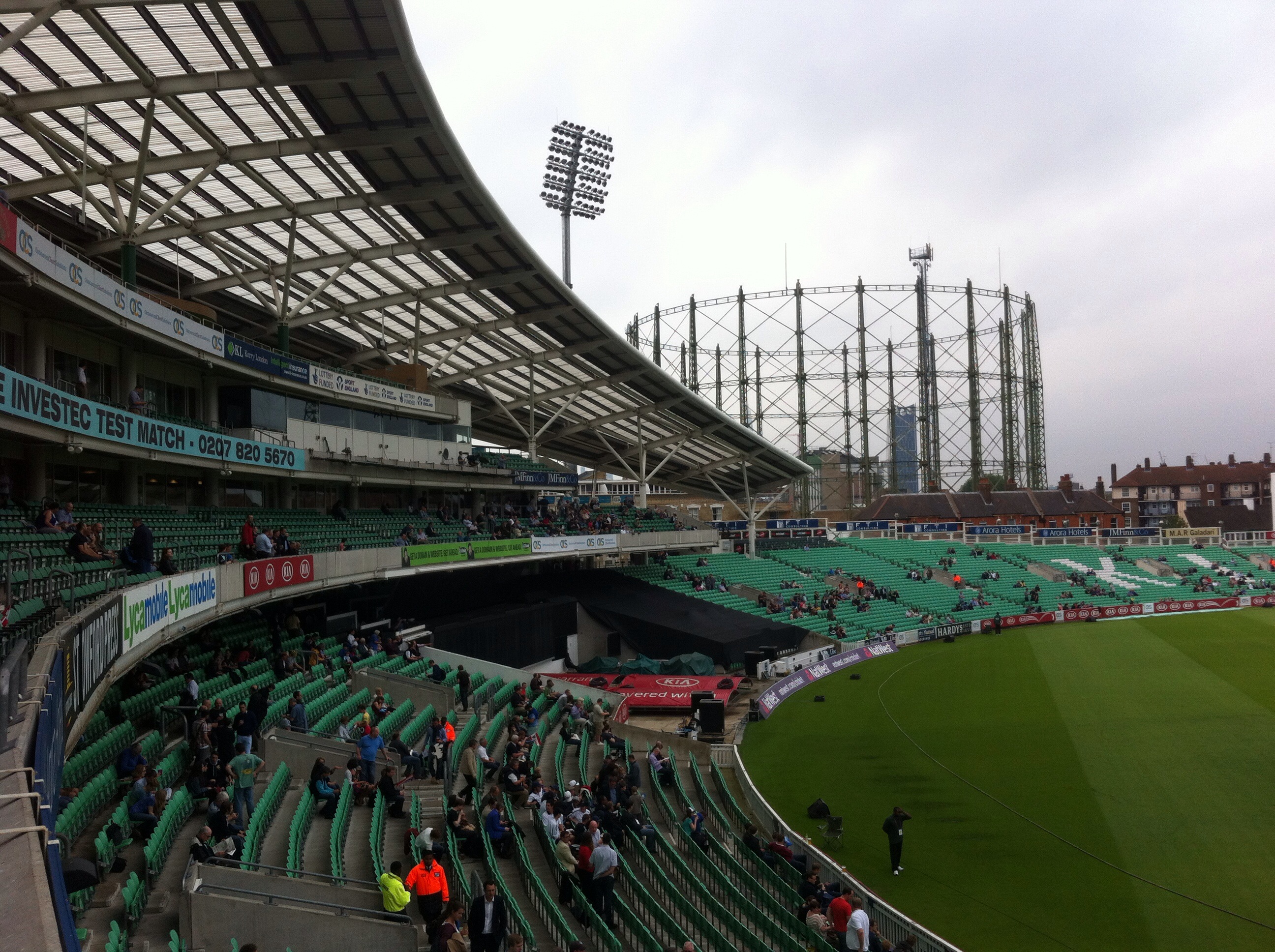
Cricket in London is also unique, due to the continued link with the counties that saw their boundaries shift as Greater London grew. Essex once played regularly in Ilford and may yet return to play some T20 matches in the Olympic Stadium. The legacy of those old county boundaries has left two major test match venues in London, also servicing the needs of Middlesex and Surrey. Whilst Mumbai has two test match venues, the exceptional part is that no other city has two venues that play to sell out crowds every summer. Lord’s is, of course, the spiritual home of the game but The Oval, with it’s neighbouring gasometer, has a special place is many cricket fans hearts as the home of great series victories at the end of a nail-biting Ashes summer.
Rugby is also home to a number of clubs, although some have left London behind to ground-share with football clubs: London Irish remain based in Sunbury, whilst playing in Reading; London Welsh have moved to Oxford; and Wasps retain their London base, but have relocated matches to Coventry. Just two remain playing in London at the top level – Saracens at Allianz Park and Harlequins at The Stoop. Twickenham, once home of Quins, has undergone a complete transformation to become the largest rugby stadium in the world and a colossal enclosed bowl of noise when at full capacity. I’m lucky to be able to visit regularly on non match days, when the 82,000 green seats encircling the pitch in three tiers are a spectacle in themselves to a sucker for the day-to-day pottering that takes place in an otherwise empty seating bowl. The new south stand, which houses a hotel, gym, shop and vast hospitality areas makes a fantastic looking approach to the stadium from Richmond and Twickenham. This modern facade masks the raw simplicity of the concrete structure that can appear dowdy, especially with rain running down the vast grey support columns.
Hopping across Richmond Park brings you to another vision in green – The All England Lawn Tennis Club, which is better known simply as Wimbledon. Across the grounds there is capacity for 38,500 spectators, with Centre Court (15,000) and No. 1 Court (11,430) by far the largest of the 19 championship grass courts. Whilst these capacities surrounding such a small field of play are impressive, it is not the scale that stands out. The AELTC is the epitome of sporting history, hosting the oldest tennis tournament since 1877. And its greatest success is in keeping longstanding traditions – players wearing all-white, a lack of advertising boards and playing on the original, natural surface for all outdoor games – whilst simultaneously keeping up with technological advances (hawkeye) and regularly evolving the design of the stadia with the recent rebuild of No. 1 Court and the ultra-modern lightweight roof on Centre Court.
London’s long sporting history has seen the world’s leading events all hosted in England, with London the main centre of each event. I’ve previously mentioned the Olympic Games and I don’t believe the claims about 2012 being a once in a lifetime opportunity. I’m expecting the IOC to return to one of their banker cities once more and for my kids to see another London Games. It would be a nice thing to see before my time is up, although I think I may need to make it to King William sending me my birthday ‘telegram’. Additionally, the largest international football tournaments – the 1966 World Cup and Euro ’96 – have both seen finals held at the old Wembley Stadium, with Wembley now a regular home for the UEFA Champions League final. The forerunner to the Commonwealth Games based at the the long lost White City Stadium (which also hosted the 1908 Olympic Games and one match the World Cup). Of the other claimants to be the third largest sporting event in the world, which was recently discussed in this BBC story, only the World Athletics Championship is an omission. Whilst London has an athletics pedigree, with Crystal Palace’s National Athletics Stadium hosting international events and the world’s greatest athletics stars since the 1970s, the capacity and limited warm-up facilities have been a barrier to holding a major championship. London was awarded the 2005 World Championships, which was to be held at the new 43,000 seater Lee Valley stadium. The plans were soon shelved due to costs but a new Lee Valley Athletics Centre was built on the same site, which hosted the athletics events in last year’s inaugural Invictus Games. We’ll finally get there in 2017 at the refurbished Olympic Stadium.
Added to all these great outdoor venues, London is also home to the magnificent O2 arena. As I sat watching a show in 2000 in the middle of the big white tent that was the Millennium Dome, I had a vision of an indoor arena, thinking that rather than pull this down at the end of the year, it could make an amazing all-weather sporting venue. I didn’t give it much thought for years, but was gobsmacked when I saw the transformation that had been made. To have built such an imposing indoor stadium – its vastness feels more stadium than arena – within an existing structure was inspired. I’ve seen Peter Kay, the NBA, Strictly and even High School Musical on Ice (for the kids, you understand) there but have always been more transfixed by the workings and structure of this pocket-sized stadium than the entertainment on stage (except perhaps for Peter Kay). London is also blessed with ExCeL, Wembley Arena, Olympia and now the Copper Box – all capable of hosting a plethora of sports and other events.
Returning to football, Qatar 2022 will be hosted by a tiny country of just 2 million people at a cost of billions of dollars to build new stadia that are almost certain to become white elephants. With Wembley and Twickenham, the bigger four’s large stadia, QPR and maybe a new Crystal Palace, London could easily host any subsequent World Cup alone without spending a penny on infrastructure or creating a single white elephant. That is truly unique for any city in the world, which is why London must be seen as the world leading Stadium City.



 StadiaGaga