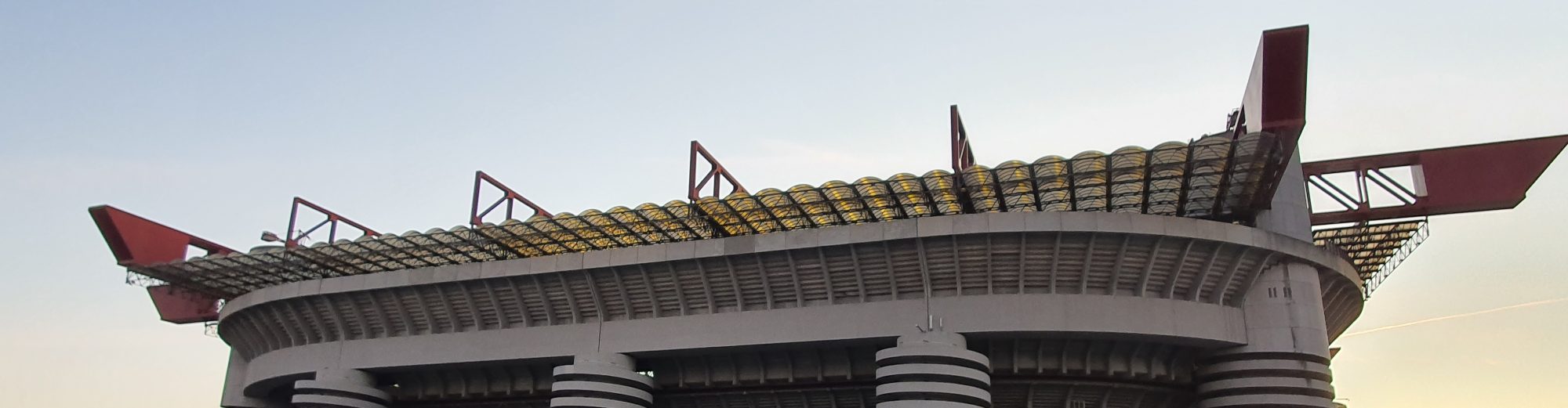
I know that my introduction suggested that the topics I would write about were in no particular order, but I couldn’t decide where to start, so I’ve opted for the first one on that list. Not only did it seem a somewhat logical place to start, I was also prompted by the BBC Sport article I read on Sunday about England’s lost football grounds
(see BBC Sport). To start my ‘Lost’ post now would have felt like looking over the shoulder of my classmate and risking treading the path of plagiarism – I decided it’s far too early in my journey to be accused of that. It also gave me a bit more to think about and research on that particular topic, so you’ll just have to wait for that little gem. However, I have found a neat link – I’ve decided to look at the result of a lost ground, which usually means the birth of a new stadium.
I’m a bit like an expectant father when it comes to news of a new stadium. Whilst excited at the prospect of something new coming into the world, I do want it to be good-looking, to function successfully and, to an extent, to fit in.
I’m fortunate to be able to say my kids tick these particular boxes. Yes, I know I’m biased, but I’ve heard positive noises from others to know I might be right! Though that’s a good start, I’m greedy and I want more. I want them to dream big, to have a few unique traits and to not always follow the same old, well trodden path of conformity. In short, I would love them to be outgoing, independent and interesting.
Being a parent gives me half a chance of influencing my offspring by encouraging them to try new and different things. I also want these from a new stadium, without me having any kind of influence over their design or construction – I am reliant on the ‘parents’ to do their job well.
New stadia tend to look impressive when you first look at them, especially when compared to the old versions they’ve replaced. They are certainly designed with the safety and comfort of spectators in mind and have the requisite needs for corporate hospitality – something that cannot be ignored due to the amount of money this generates for clubs and stadium operators. They are also more aligned with the requirements of the media and, most importantly, the athletes.
Despite this, even modern stadia never seem to tick all the boxes – often needing small tweaks when hosting events in a competition they’re not used to being involved with. Extra press positions, coaches boxes, taller advertising boards and extra cameras all mean one thing – ‘seat kills’. Building over seats, reallocating spectator seats to other clients and creating brand new restricted views of the field of play all result in a negative hit on revenue for the operator, and a reduced probability of getting a precious ticket for the average fan.
For the individual club, upgrading their stadium is a major boost to their image that may bring in even more fans, corporate guests and cold, hard cash. It sounds mercenary, but the reality is that this could be the difference between survival and a slow death.
For the outsider with no vested interest in a given stadium, aside from having an excessive enthusiasm in stadia, the collective result is a series of seemingly identikit concrete bowls popping up across the country. And, despite my desire for something shiny and new, the result is that we’ve lost much of the character that once existed.
Even cricket, with a general distain for the word ‘stadium’ (sorry, MCG, you are impossibly huge and I’d love to come and see you, but you really should be referred to as the MCS), its quaint old pavilions, grassed banks and a hotchpotch of stands is undergoing the same metamorphosis. Lords and The Oval have managed to replace large chunks of their infrastructure, simultaneously creating new, characterful spectacles. On a recent visit to watch cricket at Headingley, I couldn’t keep my eyes off the towering Carnegie Pavilion. Whilst others have just gone down the ‘pop a big concrete tier in and we’ll have lots of seats for the Ashes tests’ road, I can forgive Yorkshire CCC’s sweeping western stand because of the variety of the other buildings. It is all about balance. Back to Australia, I’ve been fortunate to visit the Sydney Cricket Ground. Unlike Melbourne, I think it just about manages to remain in the category of a ground because of the evocative green-roofed members’ and ladies’ stands. The new Adelaide Oval is now a stadium, but what a beauty she is – all down to a striking roof structure.
I used the word ‘spectacles’ in the last paragraph because part of the joy of attending any event is, at least for oddballs like me, to be in awe of the the physical space I am sitting in. Yes, I want to be wowed by the atmosphere and the performances. But, if either of those disappoint, I want to experience more for my entry fee. I also seek a kick from vastness, a novel media centre, beautiful multi-use pavilion or by the shape created by the roof and mind-boggling feats of engineering. I want the three ‘i’s of imagination, innovation and inspiration. I’ve already said I’m greedy, so, even though I love my sport, my senses need to be overloaded.
In addition to my cricketing examples, there are numerous other exceptions out there. The Etihad in Manchester is simply the best stadium in Britain, although there are many I’ve not been to and I’m sure others will contest this claim. All I can say is that I look forward to visiting anywhere with more impact. I fell for the combination of size (still growing), the soaring masts that support the dramatic sweeping roof, the corkscrew spectator towers, the sky blue that is everywhere you look and the quality of every fixture and fitting around the stadium. Even the décor in the press conference room takes your breath away. It just shows you what money can buy. Of course, you can’t blame the ‘parents’ for doing the best they can to see their child develop. Elsewhere, the Fédération Française de Rugby have commissioned a design for their own stadium – Grand Stade – that is as impressive as any of François Mitterrand’s Grands Projets elsewhere in Paris. I can see a trip on Eurostar on the horizon.
I am pragmatic and realise that decisions often come down to finances, and I concede that there is a place for straightforward, practical solutions. If an existing ground is on prime real estate, then a new location and a chance to start afresh must be tempting. It is a chance for even the smaller clubs to create an enclosed stadium to keep the wind out and the noise in. So, I’m not against them per se, I’d just like to see more variety wherever possible.
When staying put, developing what you have within the constraints of the surrounding area may be the best option. La Bombonera in Buenos Aires is as quirky as they come given no room to expand and massive clubs like Manchester United have built piecemeal over the years to end up with an enormous, still iconic, venue. I’m sure the new White Hart Lane, if we ever see it, could have been developed stand by stand at a lower cost without the risk of becoming a white and blue version of The Emirates, albeit with the desire to get closer to the pitch and the move to having a steep single-tiered stand at one end. There was once a plan for a new East Stand and there is now plenty of space next to the West and North stands. The Park Lane end to the south could have remained a noisy hub for the die-hards, but it looks like that opportunity has past. Even if you knock the whole thing down and start over in the same place, you can find ways to innovate – the Aviva Stadium in Dublin, with its exaggerated drop in height at one end of the stadium is like nothing I’ve ever seen. This innovation was dreamt up to keep the locals, who didn’t fancy (quite literally) being in the shadow of their neighbour, onside.
I guess I will always remain excited by the prospect of any new stadium, hoping that the architects will have made the most of the available budget and endeavoured to find a solution that meets some of my three ‘i’s. I’m prepared for a few less inspirational creations, knowing that they will be balanced out by some real masterpieces that really do overwhelm the senses. All I can ask is that the look was considered at least as much as the functionality and that the ‘parents’ take their role very seriously. It shouldn’t take too much to make a new build stand out. If you’re in doubt, take inspiration from Bursaspor and wrap it with a big green crocodile!
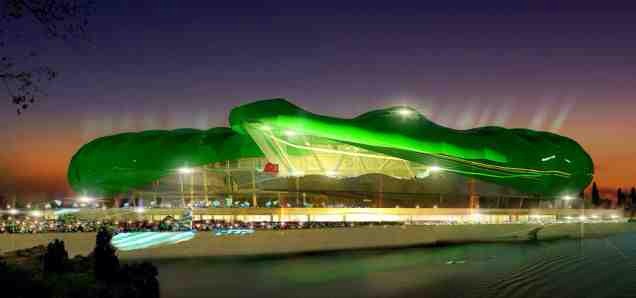
Photo borrowed from gizmodo
 StadiaGaga
Dan, nice work on your public commitment. Being from the other side of the pond, I’d like to encourage you to do a bit of research on the baseball “stadium” (a stretch as it is rather small) for the Boston Red Sox baseball team. Fenway Park. Why? It is one park that virtually EVERYBODY loves to play in and most every ardent fan either travels to or hopes to go to some day. And it is unique. It is the oldest park in the Major Leagues… opened in 1912. It is smack in the middle of the city. They have continued to renovate and make it better and better HOWEVER you can sit there and feel the history and imagine being there 100 years ago. And here is why it makes everybody “gaga”- you can go there and if the Sox lose, while not good, you still had a great night… because you “went to Fenway”. See it if you come here ever!
LikeLike
Thanks, Chris. Fenway Park is somewhere that I’ve heard a little about. Thanks for the tip – I’ll certainly give it some attention. With a 37,000 capacity, it definitely counts as a stadium in my book!
LikeLike